
Thyrotropin Releasing Hormone: The Nobel-Winning Tripeptide That Controls Your Thyroid

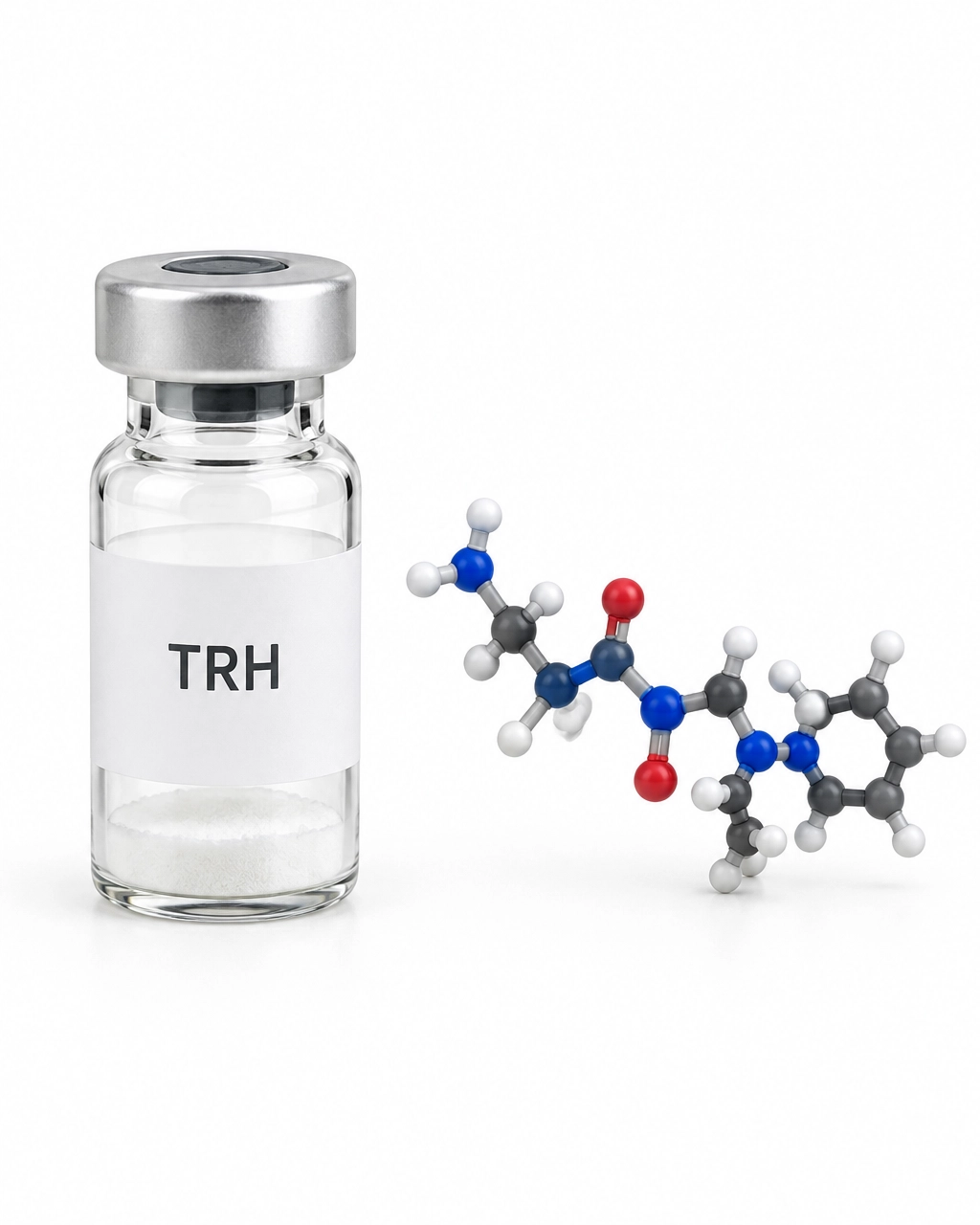
Thyrotropin-releasing hormone (TRH), also known as protirelin, is a tiny messenger with a major role in hormone signalling. It helps the brain communicate with the pituitary gland, which in turn signals the thyroid. Think of it as the first message in a three-step relay, not a direct “thyroid booster.”
TRH is also a milestone in hormone research. Work on this small peptide helped show how the brain can regulate hormone production through chemical signals. But its history and biological importance should not be confused with proof that TRH products can treat thyroid problems or improve brain function.
Research-product notice: WL Australia lists its TRH product as a research chemical, not for human use. This article is educational, not medical advice. Do not use research products to self-treat a thyroid or other health condition.
A small molecule that changed endocrinology
Before scientists isolated hypothalamic releasing hormones, the pituitary gland was understood as a major hormone-control centre, but the brain’s direct influence over it was less clear. The hypothalamus (the brain region that helps coordinate functions such as temperature, appetite and hormone regulation) was suspected of sending instructions, but identifying the messenger was a difficult task.
In the late 1950s and 1960s, researchers Roger Guillemin and Andrew Schally independently investigated hormone-releasing activity in hypothalamic tissue. Their teams worked to isolate the substance that prompted the pituitary to release thyroid-stimulating hormone (TSH). In 1969, their research established that this messenger was a peptide made from just three amino-acid residues.
That discovery helped establish a new way of understanding the brain–hormone connection: the hypothalamus could send specific chemical instructions to the pituitary, rather than merely influencing it indirectly. Guillemin and Schally shared the 1977 Nobel Prize in Physiology or Medicine for discoveries concerning peptide hormone production of the brain; Rosalyn Yalow received the other half of the prize for her work on radioimmunoassay. The Nobel recognition was for a wider body of work, not TRH alone. Read the Nobel Prize announcement.
In short: TRH was among the earliest hypothalamic releasing hormones to be isolated and characterised. Its discovery helped transform endocrinology: the study of hormones and hormone-producing glands.
What does “tripeptide” mean?
A peptide is a short chain of amino acids, the building blocks used to make proteins. A tripeptide contains three of them. TRH’s structure is written as pyroGlu-His-Pro-NH₂: pyroglutamate, histidine and proline, with a small chemical modification at each end.

You can picture a peptide as a short word made from three letter-like units. The sequence and end modifications matter: they influence how the molecule is recognised and broken down in the body. TRH may be small, but its biological role depends on those precise features, not just on having three amino acids.
The thyroid relay: TRH → TSH → T3 and T4
The best-known role of TRH is in the hypothalamic-pituitary-thyroid (HPT) axis, the signalling pathway linking the hypothalamus, pituitary and thyroid. Imagine a construction site where each team passes a work order to the next:
- The hypothalamus releases TRH. It travels through specialised blood vessels to the pituitary.
- The pituitary releases TSH. TRH signals the pituitary to release thyroid-stimulating hormone.
- TSH signals the thyroid. The thyroid gland produces thyroid hormones, mainly T4 (thyroxine) and T3 (triiodothyronine).

T3 and T4 help regulate many body functions, including energy use, heat production and aspects of heart and digestive activity. The body also uses feedback loops: when circulating thyroid hormones are sufficient, signals to the hypothalamus and pituitary generally reduce. It is more like a thermostat adjusting the heating system than a simple on/off switch.
That distinction is important. TRH is not thyroid hormone, and more TRH does not automatically mean better thyroid function. Thyroid symptoms and blood-test results need to be interpreted together by a qualified clinician.
TRH does more than signal the thyroid
The pituitary has several hormone-producing cell types, and TRH can influence more than one. In addition to TSH, TRH can stimulate release of prolactin, a hormone best known for its role in lactation but also present in people who are not breastfeeding.
TRH and its receptors are also found in parts of the central nervous system (CNS). The brain and spinal cord. This has led researchers to investigate possible roles in neuronal signalling, mood, cognition and neuroprotection. A receptor is like a receiving dock: a signal can have an effect only where the relevant receptor and cellular machinery are present.

Animal and laboratory studies have reported effects on nerve-cell activity and explored whether TRH-related compounds could protect cells in models of neurological injury. These findings are scientifically interesting, but they do not establish that TRH improves mood, memory or cognition in people, or prevents neurodegenerative disease. Evidence from cells or animal models is an early research step, not a proven human treatment.
The takeaway: TRH has a wider biological footprint than its thyroid role, but emerging research is not the same as clinical proof.
The TRH stimulation test: a once-useful diagnostic tool
Clinicians historically used a TRH stimulation test to examine how the pituitary responded after TRH was administered under medical supervision. The test could help assess parts of the HPT axis, including whether a TSH response appeared consistent with certain pituitary or hypothalamic problems.
Think of it as testing the relay by checking whether the next runner moves when the starting signal is given. But a single response does not tell the whole story. Test results need context, and TRH testing was never a stand-alone way to diagnose every thyroid disorder.
Modern, sensitive TSH tests and measurements of free T4, alongside clinical assessment and other investigations when needed, have made routine TRH stimulation testing uncommon. Historical clinical use does not mean that a research product is suitable for personal testing or treatment. Protirelin drug information describes its use in a diagnostic context; this is distinct from unsupervised use.
TRH research products and related thyroid reading
WL Australia’s TRH product page identifies the item as research use only, not for human use. A product listing is not evidence of an approved treatment, a validated dose, or a safe way to alter thyroid function. Do not inject, ingest or otherwise use research chemicals on yourself.
TRH is also distinct from products marketed under other thyroid-related names. Different names can refer to different ingredients, formulations and evidence bases; they are not automatically interchangeable. For broader context, read WL Australia’s GC-1 (sobitirome) research overview and Cytomaxes vs Cytogens. These are separate topics, not proof that TRH or any other research product treats thyroid disease.
Video placeholder 1: How TRH signals the pituitary: a simple overview of the HPT axis.
Video placeholder 2: The history of hypothalamic releasing hormones and the TRH stimulation test.
Safety first: don’t use a peptide to self-diagnose
If you have symptoms such as persistent fatigue, unexpected weight changes, unusual sensitivity to heat or cold, or changes in heart rate, arrange an assessment with a qualified Australian health professional. These symptoms can have many causes. A clinician can decide whether thyroid tests or other investigations are appropriate and explain what the results mean.
In Australia, check the status and intended use of health products with the Therapeutic Goods Administration (TGA) and seek medical advice before changing prescribed treatment. Do not stop or adjust thyroid medication, substitute a research chemical, or delay assessment because of an online article or product claim.
TRH’s story is remarkable: a three-residue peptide helped reveal how the brain directs hormone signals. The practical lesson is just as important: understand the biology, separate early research from established care, and leave diagnosis and treatment decisions to qualified clinicians.
 Immune Support, ant bacterial, anti viral, auto immune.
 Bioregulators
 Brain
 Skin & Hair Products