
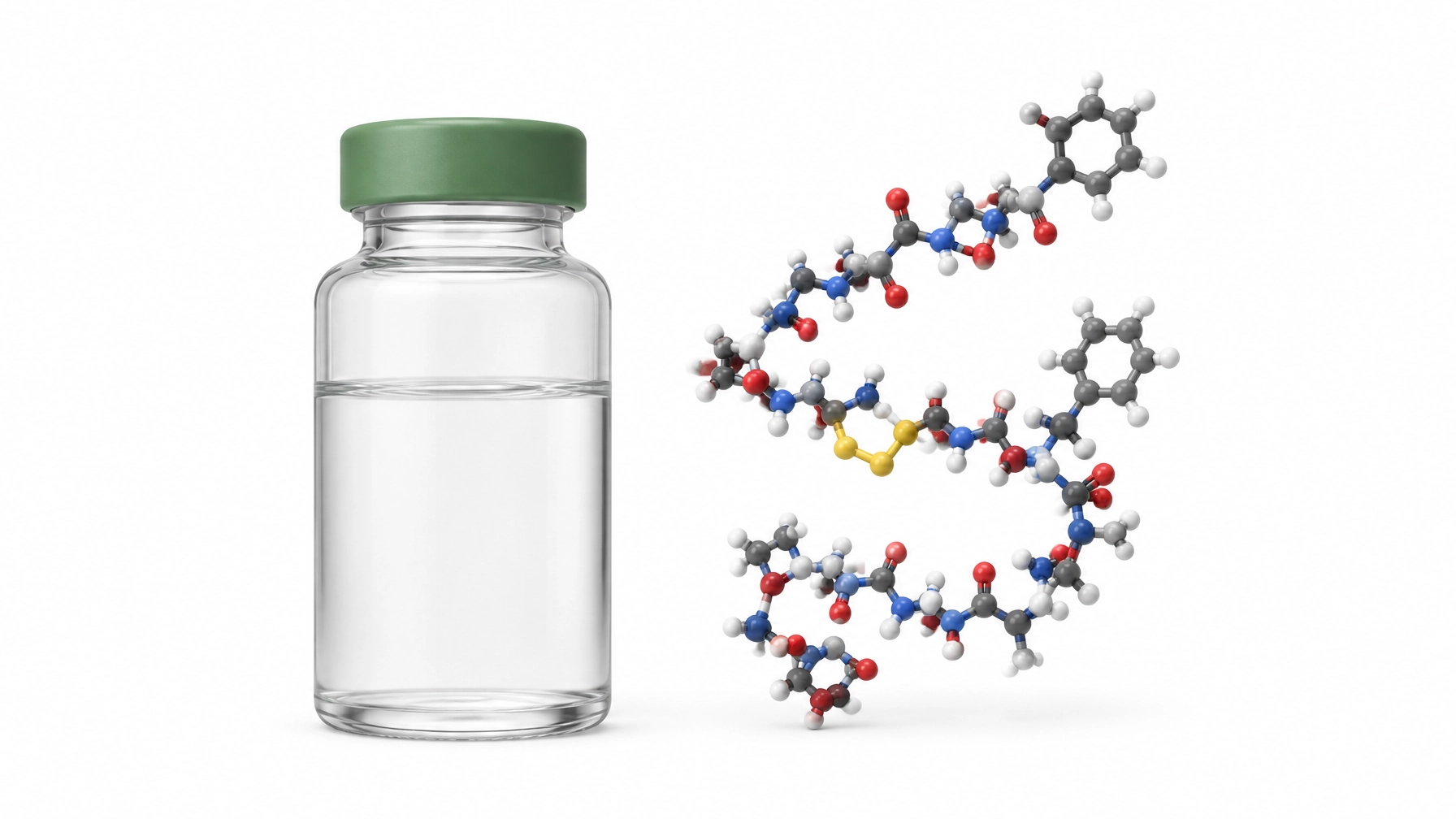
PACAP-27: The Neuroprotective Peptide for Migraine and Neuronal Survival Research

PACAP-27, short for Pituitary Adenylate Cyclase-Activating Polypeptide, 27-amino-acid form, is a neuropeptide with an unusually broad research footprint. It has been studied in neuronal survival, neuroprotection, migraine pathways, stress regulation, gut signalling and endocrine secretion.
That breadth is also the challenge. PACAP-27 is not a simple “good” or “bad” molecule. Think of it as a biological communications hub: the same network may support cell survival in one setting while contributing to headache signalling in another.
This article explains what researchers are investigating, how PACAP-27 differs from PACAP-38, and why careful receptor selectivity remains central to future research.
Important: PACAP-27 is a research compound, not an approved treatment for migraine, neurological disease or any other medical condition. Do not self-administer it. Discuss any health concerns with a qualified Australian healthcare professional.
From hypothalamic extracts to a major neuropeptide research field
The problem: complex signalling is easy to oversimplify
Many biological messengers are described as if they perform one job. PACAP does not fit that model. It acts more like a large communications network than a single-purpose switch.
PACAP was identified during research on extracts from the hypothalamus, a brain region involved in temperature, appetite, stress, sleep and hormonal regulation. Researchers found that the peptide could stimulate the enzyme adenylate cyclase, which helps cells produce the messenger molecule cyclic adenosine monophosphate, or cAMP.
The research solution: map the network, not just the molecule
You can picture cAMP as an internal text message. When PACAP binds to a receptor on a cell, it can increase cAMP and activate downstream pathways involved in:
- Cellular communication
- Neuronal resilience
- Hormone secretion
- Smooth-muscle and vascular activity
- Stress responses
- Synaptic adaptation
The result is a peptide with activity across both the central nervous system and peripheral tissues.
Short summary: PACAP-27 is best understood as a signalling coordinator, not a single-outcome supplement.
PACAP-27 and PACAP-38: two related forms

The problem: the two forms are often treated as interchangeable
PACAP mainly appears in two naturally occurring forms:
- PACAP-27: the shorter form containing 27 amino acids
- PACAP-38: the longer form containing 38 amino acids
Both forms can activate the same principal receptor families, but they are not identical in every experimental system. Their distribution, stability, tissue activity and receptor preferences can vary depending on the assay.
The research solution: compare sequence, receptor and context
PACAP-27 is commonly discussed as the shorter, strongly active form at VIP receptors. VIP means vasoactive intestinal peptide, another signalling peptide involved in blood vessels, gut function, immune activity and secretion.
In practical terms, PACAP-27 can be viewed as a shorter key that still fits several biological locks. PACAP-38 is the longer key, with its own behaviour in tissues and experimental models.
Researchers typically compare the forms by looking at:
| Research feature | PACAP-27 | PACAP-38 |
|---|---|---|
| Structure | 27 amino acids | 38 amino acids |
| Main receptor families | PAC1, VPAC1 and VPAC2 | PAC1, VPAC1 and VPAC2 |
| VIP-receptor activity | Strong activity reported in experimental systems | Also active, with context-dependent differences |
| Brain research | Neuronal survival, signalling and plasticity | Neuroprotection, migraine and stress research |
| Clinical interpretation | Preclinical or early-stage evidence | Preclinical or early-stage evidence |
| Approved self-treatment use | None | None |
The key point is simple: shorter does not mean safer, weaker or automatically better. Potency depends on the receptor, tissue, concentration, delivery method and experimental conditions.
Three receptor targets: PAC1, VPAC1 and VPAC2
The problem: one peptide can create different outcomes through different receptors
PACAP-27 acts through three major class B G-protein-coupled receptors:
- PAC1
- VPAC1
- VPAC2
A receptor works like a docking station. The peptide arrives, connects, and changes the cell’s internal instructions.
The research solution: separate receptor roles
PAC1: the PACAP-preferring receptor
PAC1 shows a stronger preference for PACAP than for VIP. It is widely studied in the brain and has been associated with:
- Neuronal survival
- Neuroprotective signalling
- Synaptic plasticity
- Stress circuitry
- Trigeminal pain pathways
- Migraine biology
PAC1 is therefore a major research target. The difficulty is that activating PAC1 may produce different outcomes in different tissues. A pathway that supports neuronal survival in one model may also participate in headache signalling in another.
VPAC1 and VPAC2: the shared VIP receptors
VPAC1 and VPAC2 respond to both PACAP and VIP. They are studied in:
- Blood-vessel regulation
- Gut and intestinal activity
- Endocrine secretion
- Immune signalling
- Autonomic nervous system function
This receptor overlap creates a major design problem. Researchers may want the nervous-system effects of PACAP while avoiding excessive vasodilation or unwanted changes in gastrointestinal and endocrine activity.
Pulse point: Receptor selectivity is the foundation of PACAP-27 research.
Neuroprotection and neuronal survival

The problem: stressed neurons can enter a destructive cycle
Neurons are like high-performance electrical systems. They require substantial energy, precise signalling and protection from inflammation. During oxidative stress, injury or excitotoxicity, the system can become overloaded.
Excitotoxicity means excessive stimulation by neurotransmitters such as glutamate. It is similar to holding a car engine at maximum revs for too long: the system generates heat, consumes resources and may eventually fail.
The research solution: investigate survival and repair pathways
Preclinical PACAP research has explored several protective mechanisms, including:
- Supporting anti-apoptotic signalling
- Reducing oxidative stress
- Modulating inflammatory responses
- Influencing neurotrophic factors such as brain-derived neurotrophic factor, or BDNF
- Supporting synaptic adaptation and neuronal communication
Studies have investigated PACAP-related pathways in models of cerebral ischaemia, retinal injury, traumatic brain injury and neurodegenerative disease. PACAP-27 has also been examined in relation to glutamate and NMDA receptors, which help regulate learning, memory and excitatory signalling.
However, a laboratory result is not the same as a proven human therapy. A cell culture dish is a controlled workshop; the human brain is an entire city with changing traffic, weather and power demands.
For broader context, see our related research articles on ARA-290 and nerve-repair research and mitochondrial peptides such as SS-31 and Humanin.
PACAP-27 and migraine research
The problem: a neuroprotective pathway may also activate headache biology
Migraine involves more than a blood vessel problem. It includes interactions between the brain, trigeminal nerves, blood vessels, inflammatory mediators and pain-processing centres.
PACAP is present in structures involved in this system. Research has examined its relationship with:
- The trigeminovascular system
- Cranial blood-vessel dilation
- Neurogenic inflammation
- Trigeminal pain signalling
- The hypothalamus
- Stress-triggered headache pathways
Human infusion studies have reported migraine-like attacks after PACAP exposure in some participants with migraine. This is one reason PAC1 has become an important target for migraine-drug development.
That creates a biological contradiction:
- PACAP-related signalling may support neuronal survival in some preclinical models.
- The same signalling network may contribute to migraine-like responses.
Researchers are exploring PAC1 antagonists and antibodies that target PACAP-related pathways. These approaches are still part of an evolving research and clinical-development landscape.
Do not interpret neuroprotective findings as evidence that PACAP-27 can prevent or treat migraine. Anyone experiencing recurrent headaches, visual changes, weakness, speech problems or sudden severe pain should seek medical assessment.
Stress, the HPA axis and endocrine signalling

The problem: chronic stress can disrupt multiple biological systems
The HPA axis, or hypothalamic-pituitary-adrenal axis, is the body’s central stress-response pathway. Imagine it as a three-station relay:
- The hypothalamus sends the first signal.
- The pituitary amplifies the message.
- The adrenal glands release stress hormones.
PACAP is being studied as one of the messengers that can influence this relay. Research has examined its relationship with stress responses, anxiety-like behaviours, hormone release and stress-sensitive brain circuits.
The research solution: study PACAP as a systems regulator
PACAP-27 also has a role as a secretagogue. A secretagogue is a substance that encourages a cell or gland to release another substance, such as a hormone, enzyme or digestive secretion.
In the gut and endocrine system, PACAP-related signalling is being investigated in relation to:
- Gut motility
- Pancreatic and intestinal secretion
- Blood flow
- Pituitary hormone release
- Autonomic regulation
- Gut–brain communication
These effects help explain why PACAP-27 cannot be assessed only through a “brain health” lens. It is closer to a team captain communicating with several departments at once. Changing one instruction may alter the performance of the whole team.
Research handling and Australian safety considerations
PACAP-27 should be treated as a laboratory research material. It is not a conventional dietary supplement, and there is no established consumer protocol for treating migraine, stress, neurodegeneration or endocrine conditions.
Before considering any research compound, focus on:
- Clinician review: Discuss your medical history, medications and symptoms with a qualified practitioner.
- Regulatory awareness: Australian therapeutic goods rules apply to products intended for human use. Check current information from the Therapeutic Goods Administration.
- Quality documentation: Review certificates of analysis, identity testing and batch information where available.
- No self-treatment: Do not inject, ingest or otherwise use PACAP-27 outside an approved professional or laboratory setting.
- Temperature awareness: Australian heat can affect temperature-sensitive materials during storage and transport. Follow the supplier’s documented storage requirements.
- Symptom investigation: Do not use a research peptide to delay assessment of migraine, neurological or hormonal symptoms.
You can browse the WL Australia research peptide shop for current catalogue information. Related neuropeptide research pages include Neuropeptide Y and Neurotensin. Availability can change, so confirm current product information directly before ordering.
Video placeholders
Video Placeholder 1: PACAP-27 explained, PAC1, VPAC1 and VPAC2 receptor signalling in a simple visual model.
Video Placeholder 2: PACAP-27 research landscape, neuroprotection, migraine pathways, stress regulation and endocrine signalling.
Final perspective: understand the balance
PACAP-27 is scientifically interesting because it connects several major research themes: neuronal survival, neuroprotection, migraine, stress, gut function and endocrine secretion.
The most important lesson is balance. PACAP-27 is not a universal “recovery” switch. It is a complex signalling molecule whose effects depend on receptor subtype, tissue location, timing and biological context.
If you are evaluating PACAP-27 research, use a structured approach:
- Define the research question.
- Identify the receptor and tissue involved.
- Separate preclinical findings from human evidence.
- Consider both potential benefits and risks.
- Maintain clinician oversight and legal compliance.
That is how you move from hype to understanding, and from speculation to responsible optimisation.
 Immune Support, ant bacterial, anti viral, auto immune.
 Bioregulators
 Brain
 Skin & Hair Products