
Goserelin: The Depot GnRH Agonist Behind Hormone Suppression Research

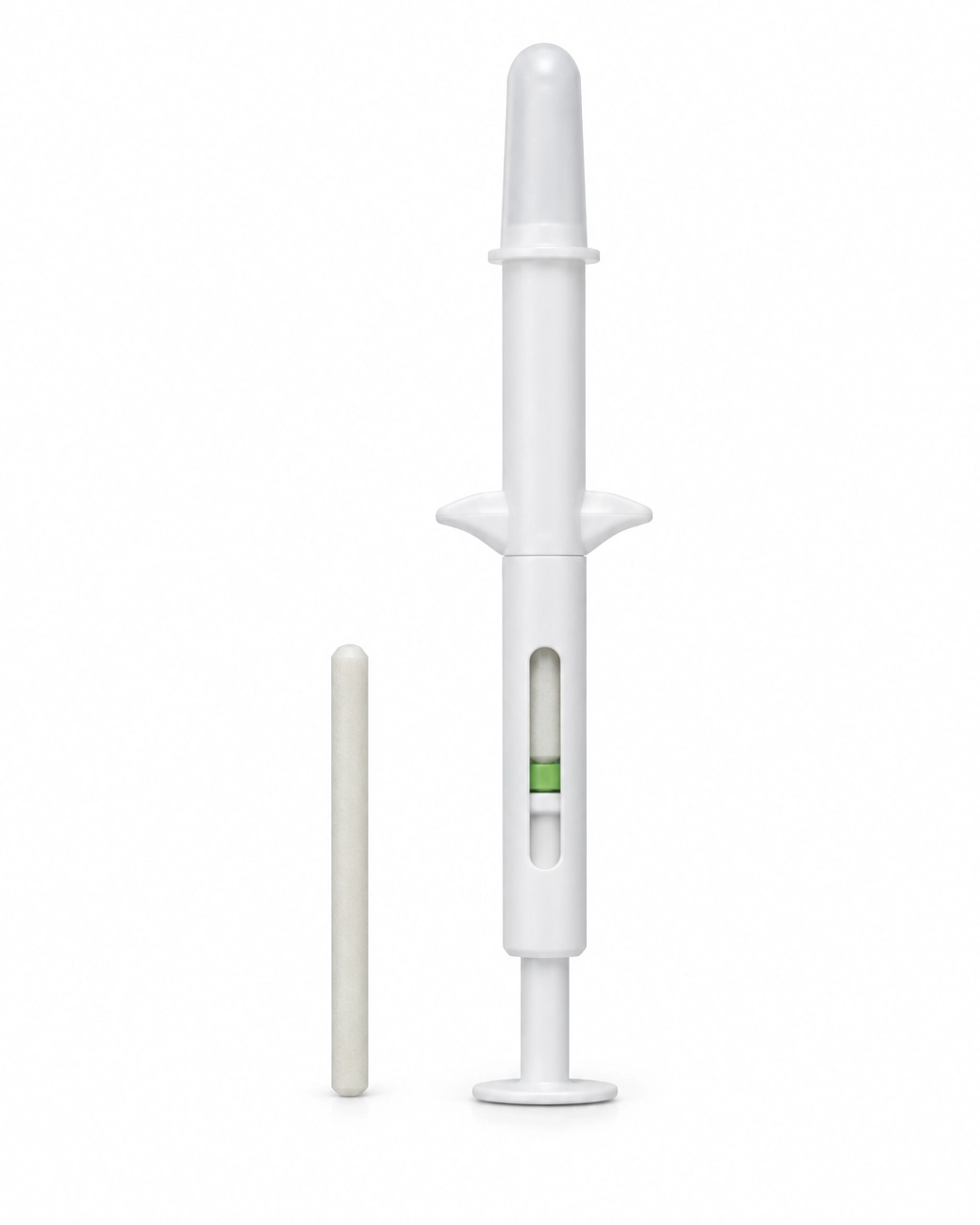
Illustrative image only; this is not a photograph of Zoladex or a depiction of a specific product.
Goserelin is a synthetic decapeptide, a molecule made of ten amino-acid building blocks, that acts on the reproductive hormone system. It is best known as the active ingredient in Zoladex, a registered prescription medicine supplied as a long-acting implant.
Its effect can seem paradoxical: an initial surge in hormone signalling is followed by sustained suppression. Understanding that sequence helps explain why goserelin has established uses in certain hormone-sensitive cancers, endometriosis and assisted reproduction, and why it is also used in carefully controlled research on the hypothalamic-pituitary-gonadal axis.
Important safety and Australian regulatory note: Goserelin is a Schedule 4 prescription medicine. It must be prescribed, administered and monitored by qualified clinicians. It can cause significant hormonal changes, including effects on bone density and cardiovascular health. It is not for self-administration or self-supervised use. TGA registration applies to the approved prescription product and its specified uses, not to unsupervised use or research-grade products.
Why can a hormone-like medicine switch from stimulation to suppression?
Goserelin is a gonadotrophin-releasing hormone (GnRH) agonist. GnRH is a messenger released by the brain that signals the pituitary gland to release luteinising hormone (LH) and follicle-stimulating hormone (FSH). These hormones, in turn, influence sex-hormone production in the ovaries or testes.
Think of the system as a thermostat. Under usual conditions, the brain sends GnRH in pulses, helping the body adjust hormone output. Goserelin provides a continuous signal instead. At first, the pituitary responds to that signal: LH and FSH can rise, and sex hormones may temporarily increase. This is called the initial flare.
With continued exposure, the pituitary’s GnRH receptors become less responsive and are downregulated, meaning fewer functional receptors remain available to respond. LH and FSH then fall, reducing stimulation of the ovaries or testes. In men receiving treatment, testosterone can fall to the castrate range; in women, oestradiol can be suppressed to levels comparable with those after menopause. The effect is maintained while treatment continues.
Short version: first comes stimulation; sustained exposure then turns down the signal. The early flare is a real part of the mechanism, not a reason to change treatment without medical advice.

Illustrative image only; the actual medicine and its delivery system should be identified from approved product information.
Video placeholder 1. How GnRH agonists work: A clinician-led animation showing the initial LH/FSH flare, followed by pituitary receptor desensitisation and reduced sex-hormone production.
What makes the depot formulation different?
Zoladex is supplied as a small biodegradable implant that releases goserelin over time. The Australian Product Information describes it as a sustained-release implant administered under the skin of the abdominal wall by a clinician. Depending on the formulation and indication, the registered implants are generally given at approximately four-week or 12-week intervals. These intervals are product information, not a dosing guide; the appropriate formulation and schedule are determined by the prescriber.
A depot is like a slow-release timer: it delivers medicine over an extended period without daily dosing. That can simplify treatment schedules, but it also means the exposure cannot be quickly switched off simply by stopping a tablet or spray. The implant must be given by trained healthcare professionals, with follow-up based on the person’s condition and response.
For Australian product details, see the TGA’s Zoladex 3.6 mg ARTG entry, its Zoladex 10.8 mg ARTG entry, and the Australian Product Information. The TGA notes that product information can be superseded, so clinicians should check the current version.
Where is goserelin used clinically?
Goserelin is not an all-purpose hormone optimiser. Its clinical role is to suppress hormone signalling in defined circumstances, with the intended use depending on the condition and the specific registered formulation.
| Clinical setting | Why hormone suppression may be used |
|---|---|
| Prostate cancer | Lowering testosterone can be part of treatment for metastatic or locally advanced disease when hormonal manipulation is appropriate. It can also be used with radiotherapy in specified locally advanced settings. |
| Oestrogen-receptor-positive breast cancer | In premenopausal or perimenopausal patients, ovarian suppression may be used as part of specialist-selected treatment. |
| Endometriosis | Suppressing ovarian oestrogen can reduce symptoms and the size or number of endometrial lesions in appropriate patients. |
| Assisted reproduction | Pituitary downregulation can be used in selected fertility protocols to help control the timing of ovarian stimulation. |
The exact approved indication depends on the strength and current Australian Product Information. For example, the Australian information for the 10.8 mg implant lists prostate and oestrogen-receptor-positive breast cancer indications. The 3.6 mg product information also covers endometriosis and pituitary downregulation before controlled ovarian overstimulation. An IVF protocol is specialist-led and requires monitoring; it is not a do-it-yourself fertility method.
In prostate cancer, the initial testosterone flare may temporarily worsen symptoms in some people, particularly where cancer affects the bones or risks obstruction or spinal-cord compression. Clinicians assess that risk and may use additional treatment or monitoring as appropriate. In women, early hormone changes can cause temporary symptoms or bleeding before suppression takes effect.
Video placeholder 2, Depot treatment in practice: A healthcare professional explains why goserelin is prescribed for selected conditions, how clinicians monitor treatment and why the initial flare matters.
Goserelin versus nafarelin: depot implant or nasal spray?
Goserelin and nafarelin are both GnRH agonists, so both can produce the initial flare followed by pituitary desensitisation with continued exposure. Their delivery and dosing patterns differ.
| Feature | Goserelin | Nafarelin |
|---|---|---|
| Route | Subcutaneous biodegradable depot implant, administered by a clinician | Intranasal spray |
| Typical pattern | Sustained release over weeks; formulation intervals vary | Repeated daily dosing; the cited UK product information describes twice-daily use in relevant protocols |
| Practical trade-off | Less frequent administration, but the depot is not quickly stopped | Avoids an implant, but depends on regular use and nasal absorption |
| Shared consideration | Both can cause an initial flare and substantial hormone suppression | Both can cause an initial flare and substantial hormone suppression |
Nafarelin’s plasma half-life is about four hours, according to its product information. That does not mean its hormone effects end immediately when a dose is missed or treatment stops. It is a comparison of delivery and pharmacology, not a recommendation to choose one medicine over another. Australian availability and registration should be checked separately.
For related WL Australia reading on the reproductive hormone axis, see A Research Guide to Gonadorelin and Triptorelin and browse the hormone-related listings. The accessible company catalogue did not provide a verified Goserelin-specific product page or Nafarelin article, so neither is linked here. For registered-product information, use the TGA links above.

Illustrative image only; not a photograph of a named medicine.
What does goserelin contribute to hormone research?
Researchers can use goserelin as a controlled way to suppress signalling along the hypothalamic-pituitary-gonadal (HPG) axis: the communication pathway connecting the brain, pituitary gland and reproductive organs. This is different from treating the medicine as a general “research peptide”: goserelin is an established prescription medicine, and research involving it requires appropriate clinical, ethical and regulatory oversight.
One example is the ongoing ARMOR clinical study, which is investigating sex-steroid suppression and replacement in relation to physiological adaptation during multi-stressor training. It is a registered study, not proof of a treatment benefit; its results should not be assumed before they are reported and assessed.
In research, think of goserelin as a way to alter one part of a complex system and observe what follows. It does not, by itself, explain every change in mood, performance, bone health or metabolism. Researchers need appropriate comparison groups and measurements, and must account for individual variation and other factors.
Safety, monitoring and next steps
Hormone suppression is powerful precisely because it changes normal body signals. Possible effects include hot flushes, sweating, changes in libido or sexual function, mood changes, vaginal dryness and injection-site reactions. Longer treatment can reduce bone mineral density. The Australian Product Information also describes concerns that may include blood-glucose changes, cardiovascular risk and QT-interval prolongation. The time taken for the heart’s electrical system to reset between beats.
Before treatment, discuss your medical history, medicines, bone-health risks, cardiovascular health and fertility plans with your clinician. During treatment, follow the monitoring plan and keep scheduled appointments. Do not delay, repeat or stop treatment yourself, and seek urgent medical advice for severe or rapidly worsening symptoms.
Goserelin is a clinician-managed prescription medicine, not a self-directed hormone experiment. If you are researching the HPG axis, start with the mechanism, verify the current Australian regulatory information and keep all clinical decisions under appropriate medical oversight.
 Immune Support, ant bacterial, anti viral, auto immune.
 Bioregulators
 Brain
 Skin & Hair Products