
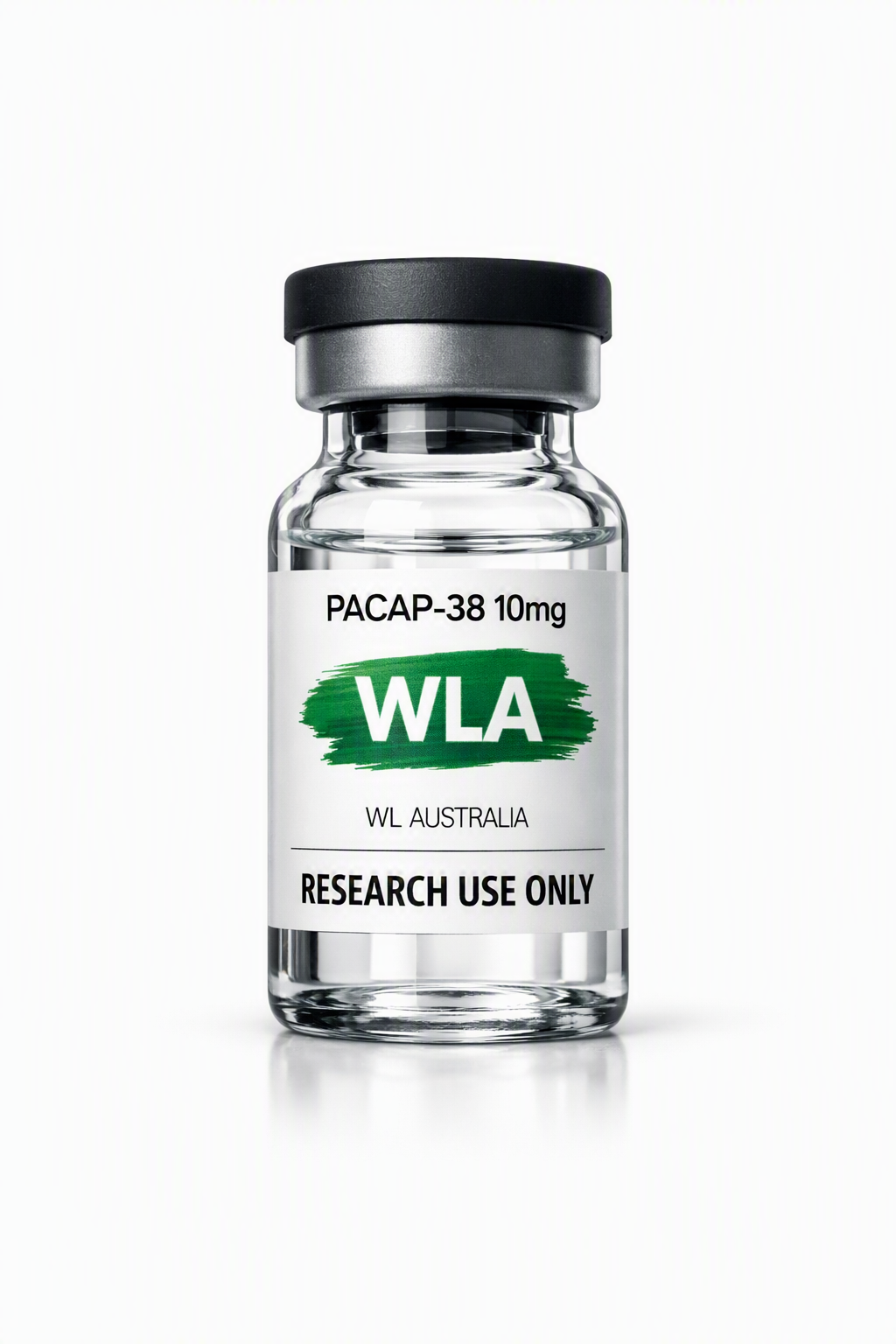
PACAP-38: The Full-Length Peptide for Neuroprotection and Migraine Research

Pituitary adenylate cyclase-activating polypeptide-38 (PACAP-38) is the full-length, 38-amino-acid form of PACAP. It is the dominant PACAP form found in circulation and tissues, and it has become an important subject in research into neuronal survival, migraine biology, stress regulation, vascular signalling and inflammation.
This article is a companion to our PACAP-27 product page. The focus here is not simply what PACAP does. It is why the 38-amino-acid form behaves differently from PACAP-27.
Research-use notice: PACAP-38 supplied by WLAustralia is a research chemical and is labelled not for human use. It is not an approved treatment for migraine, neurodegenerative disease, stress, inflammation or any other medical condition. Do not self-treat or self-administer it. Discuss health concerns with a qualified Australian clinician.
Why PACAP-38 matters: the “full-length” signal
The problem: treating PACAP-27 and PACAP-38 as interchangeable
PACAP-27 and PACAP-38 share the first 27 amino acids, so it is tempting to treat them as the same molecule with different lengths. That is like comparing a short radio antenna with a full-length antenna: they may connect to the same station, but their range, signal strength and operating behaviour can differ.
The research solution: study the dominant physiological form
PACAP-38 makes up the majority of PACAP detected in the body and is widely distributed throughout the central and peripheral nervous systems. It is found in areas involved in:
- Neuronal survival and repair
- Pain and headache signalling
- Stress and endocrine regulation
- Blood-vessel tone
- Pancreatic and metabolic control
- Adrenal and gonadal signalling
- Immune and inflammatory communication
PACAP-38 is therefore studied as both a neuropeptide, a messenger used by nerve cells, and a broader peripheral hormone-like regulator.
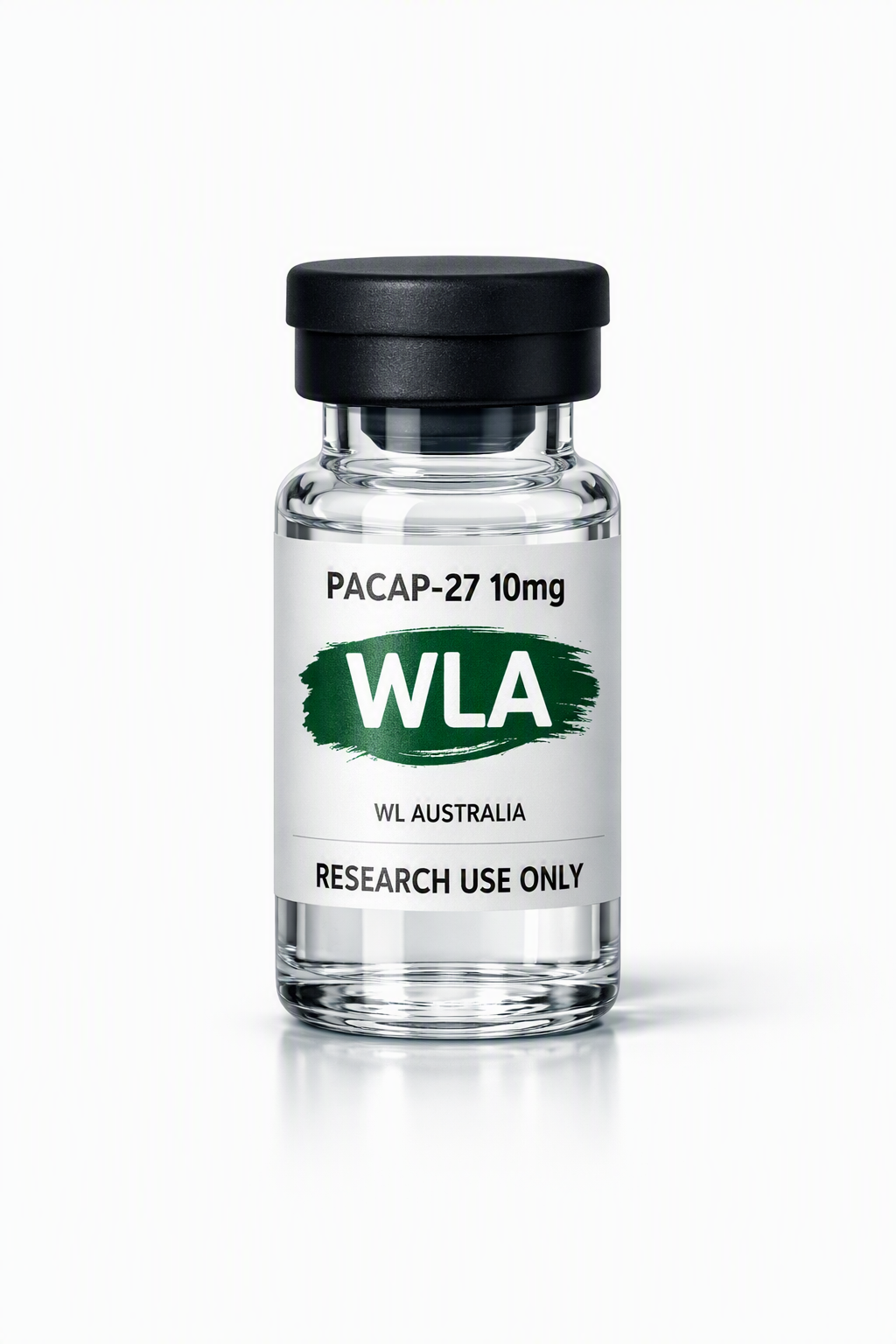
PACAP-38 vs PACAP-27: what really changes?
The problem: focusing only on amino-acid count
The difference between 27 and 38 amino acids may look small on paper. In biology, however, a short sequence can change how a peptide folds, travels, resists breakdown and activates receptors. Think of the final 11 amino acids as extra components added to a multi-tool: they can change how the entire tool operates.
The solution: compare structure, distribution and signalling together
| Feature | PACAP-38 | PACAP-27 |
|---|---|---|
| Length | 38 amino acids; full-length form | 27 amino acids; shorter form |
| Physiological abundance | Dominant form in circulation and many tissues | Less abundant form |
| Distribution | Broad distribution across central and peripheral nervous systems, adrenal, gonadal and pancreatic tissue | Present in overlapping systems but generally less dominant |
| Circulating role | More prominent as a circulating, hormone-like signal; plasma protein binding may influence its persistence and measurement | More often studied as a shorter local signalling form |
| Receptor profile | Activates PAC1, VPAC1 and VPAC2, with isoform-specific differences in downstream signalling | Also activates all three receptor families, but relative efficacy can differ |
| Kinetics | Longer-lived in some circulating and physiological contexts, although estimates vary with species, assay and preparation | Kinetics may be different because of altered degradation and tissue handling |
| Neuroprotection research | The main physiological form studied in neuronal survival and stress-resilience models | Shows overlapping activity, but has a smaller research base in some applications |
| Migraine research | Central focus of PAC1-related headache research | Also biologically active, but less prominent in modern clinical migraine studies |
| Peripheral endocrine research | Strong focus in adrenal, gonadal, pancreatic and vascular studies | Studied as a related isoform with overlapping actions |
A careful interpretation is important: PACAP-38 is not automatically “better” than PACAP-27. The appropriate form depends on the research question.
Receptor selectivity: PAC1, VPAC1 and VPAC2
The problem: assuming one receptor explains every effect
PACAP interacts with three main G-protein-coupled receptors (GPCRs). GPCRs are cell-surface communication switches that translate an external signal into an internal response.
- PAC1: the PACAP-preferring receptor
- VPAC1: a receptor shared by PACAP and vasoactive intestinal peptide (VIP)
- VPAC2: another shared PACAP/VIP receptor
PACAP-38 and PACAP-27 can both activate these receptors, but not always with identical potency or downstream efficacy. PAC1 can also exist in different splice variants, slightly different receptor versions that connect to different intracellular pathways.
The solution: examine the downstream pathway, not just receptor binding
PAC1 signalling may influence:
- Adenylyl cyclase and cyclic AMP, a major cellular signalling system
- Phospholipase C, which helps regulate calcium-related activity
- Protein kinase pathways, involved in cell survival and adaptation
- Ion-channel activity, affecting neuronal excitability
This is similar to using the same key in several buildings. The key may fit each lock, but the room behind each door is different. PACAP-38’s longer structure and dominant tissue distribution make it especially valuable when researchers want to study the full physiological PACAP signal.
Neuroprotection and neuronal survival
The problem: neurons have limited recovery capacity
Neurons are like specialist workers on a construction site. If they are damaged by oxidative stress, oxygen deprivation, excessive stimulation or inflammation, they cannot always replace themselves easily.
The solution: study PACAP-38 as a cellular survival signal
PACAP-38 research has examined pathways involved in:
- Anti-apoptotic signalling, helping cells resist programmed cell death
- Oxidative-stress control, reducing damage from unstable reactive molecules
- Mitochondrial support, helping cells manage energy production
- Synaptic plasticity, the ability of connections between neurons to adapt
- Neuroinflammatory regulation, moderating harmful immune signalling around nervous tissue
These findings do not establish PACAP-38 as a treatment. They show why it remains relevant in laboratory models of retinal injury, neuronal stress, ischemia and neurodegenerative processes.
For broader background, explore our articles on neural plasticity and cognitive research and Cerebrolysin neuroprotective research.
[Video placeholder: PACAP-38 and neuronal survival, animated explanation of PAC1 signalling, cyclic AMP and cellular stress responses]
Migraine and headache pathways
The problem: a neuroprotective peptide can also activate pain pathways
PACAP-38 illustrates an important research principle: a molecule may protect neurons in one setting while triggering headache biology in another. It is not a simple “good” or “bad” signal.
Human infusion studies have shown that PACAP-38 can provoke headache and, in susceptible people, delayed migraine-like attacks. Researchers are investigating how this may involve:
- PAC1 receptor activation
- Dilation of cranial blood vessels
- Trigeminal nerve activation
- Dural mast-cell signalling
- Neurogenic inflammation, where nerves release inflammatory messengers
The effect is comparable to a car that supports a smooth journey at low, controlled output but becomes unsafe when the accelerator is forced. Context, concentration, route and individual biology all matter.
The solution: study PACAP-38 to understand PAC1-targeted therapies
Because PACAP-38 is closely linked to migraine biology, researchers are studying PAC1 antagonists, compounds designed to reduce PAC1 signalling, as possible future therapeutic strategies. This does not mean PACAP-38 should be used to manage or prevent migraine.
If you experience new, severe or changing headaches, seek medical assessment. Do not attempt to reproduce infusion or administration studies outside an approved clinical or laboratory setting.
Stress, the HPA axis and peripheral hormone signalling
The problem: stress is controlled by a network, not one hormone
The hypothalamic-pituitary-adrenal (HPA) axis is the body’s main stress-response circuit. It works like a three-station relay:
- The hypothalamus sends an initiating signal.
- The pituitary passes the message forward.
- The adrenal glands release glucocorticoids such as cortisol.
PACAP-38 is studied as an upstream regulator within this network. It may influence stress-related signalling, pituitary activity and adrenal responses.
The solution: investigate PACAP-38 across tissues
PACAP-38 has a particularly important peripheral research profile:
- Adrenal tissue: studied in stress-responsive catecholamine and steroid signalling
- Gonadal tissue: investigated in reproductive and endocrine regulation
- Pancreatic tissue: examined in insulin release and islet-cell communication
- Vascular tissue: studied in smooth-muscle relaxation and blood flow
- Immune tissue: investigated in communication between nerves and inflammatory cells
This wider distribution is one of the key reasons PACAP-38 should not be viewed only as a “brain peptide.” It is more like a central operations manager sending instructions across several departments.
Cardiovascular, immune and inflammatory research
The problem: blood vessels and immune cells must respond without overshooting
Healthy physiology depends on balance. Too little vascular relaxation can impair blood flow; too much can contribute to headache, flushing or low blood pressure. Similarly, immune signalling must respond to danger without creating unnecessary tissue damage.
The solution: map PACAP-38’s context-dependent effects
PACAP-38 has been studied for its potential to:
- Relax vascular smooth muscle
- Influence blood-pressure regulation
- Modify endothelial and vascular signalling
- Communicate with immune cells
- Alter cytokine and inflammatory pathways
- Support cellular resilience during inflammatory stress
Results vary across tissues and models. PACAP-38 is not an established cardiovascular or anti-inflammatory therapy.
For related peptide research, see our VIP research guide, which covers another peptide in the VIP/PACAP family.
[Video placeholder: PACAP-38 compared with PACAP-27, receptor activity, peripheral hormone signalling and migraine research]
Safe research and responsible next steps
PACAP-38 is scientifically interesting because it sits at the intersection of neuroprotection, migraine, endocrine regulation, vascular biology and inflammation. Its full-length structure and dominant distribution make it an important reference form when researchers want to understand physiological PACAP signalling.
The responsible approach is straightforward:
- Treat PACAP-38 as a research chemical, not a supplement or medicine.
- Do not self-administer it or use it to treat headaches, stress, inflammation or cognitive concerns.
- Ask a qualified clinician to review symptoms and medication interactions.
- Check current Therapeutic Goods Administration (TGA) information and Australian requirements before conducting regulated work.
- Use appropriate laboratory controls, validated methods and documented handling procedures.
- Do not assume that PACAP-38 and PACAP-27 produce interchangeable results.
You can view the PACAP-38 10mg research product for product information and availability. Use the surrounding research literature to define the question first, then select the peptide form that matches the model.
Better research starts with precision. Understand the isoform, map the receptor, respect the risk.
 Immune Support, ant bacterial, anti viral, auto immune.
 Bioregulators
 Brain
 Skin & Hair Products