
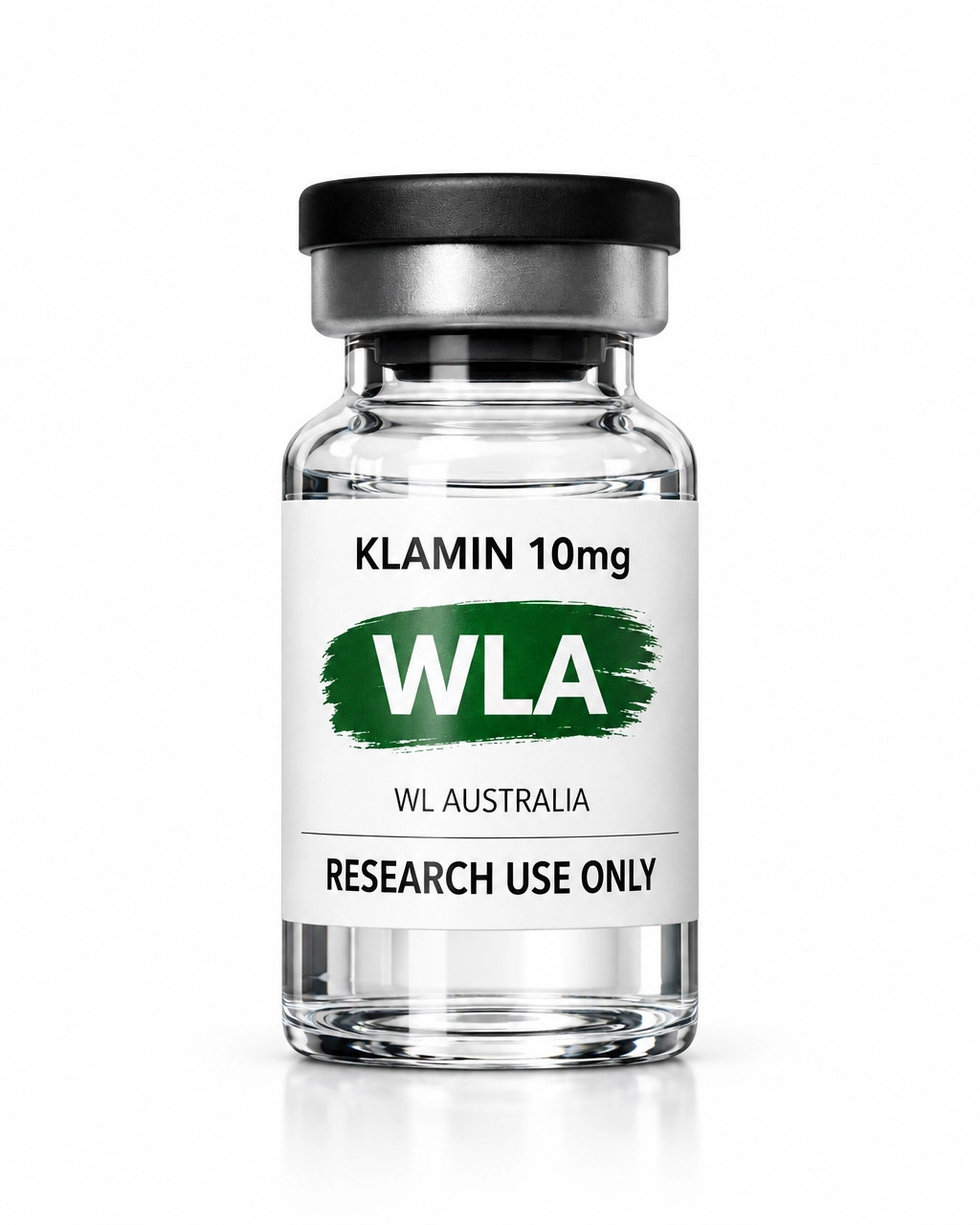
Klamin: The Klamath Algae Extract Studied for Mood, Antioxidant and Neuroprotective Effects

When you hear “Klamin,” it is easy to assume you are looking at another peptide or synthetic nootropic. You are not. Klamin is an algae-derived nutraceutical extract made from Aphanizomenon flos-aquae (AFA), a blue-green microalga associated with Upper Klamath Lake in Oregon, United States.
The extract is also referred to in some literature and commercial material as Klamamin or Klamin extract. Its research interest comes from a combination of naturally occurring compounds, including phenylethylamine (PEA), AFA-phycocyanins and mycosporine-like amino acids (MAAs).
The proposed model is simple: Klamin may provide PEA while its other compounds help reduce the enzyme activity that breaks PEA down. Think of PEA as a short-lived message and monoamine oxidase B as the “message shredder.” If the shredder works more slowly, the signal may remain available for longer.
But keep the evidence in perspective. The human evidence base is small and early. Klamin is not an approved treatment for depression, dementia, Parkinson’s disease or any other medical condition.
What is Klamath algae?
The problem: “blue-green algae” covers many different organisms
The term blue-green algae can be confusing. Some products come from cultivated cyanobacteria, while others are harvested from natural lakes. Different species can contain different nutrients, pigments and potential contaminants.
The solution: identify the organism and its source
Klamin is associated with Aphanizomenon flos-aquae, commonly abbreviated as AFA. The organism grows in the mineral-rich waters of Upper Klamath Lake in Oregon. Although commonly called an algae, AFA is technically a cyanobacterium. A photosynthetic microorganism that uses light to produce energy.
Imagine Upper Klamath Lake as a natural biological greenhouse. Sunlight, water chemistry and seasonal conditions support the growth of AFA. The harvested material can then be processed into extracts designed to concentrate particular compounds.

The result is not a single isolated molecule. It is better understood as a biochemical matrix, similar to a team rather than one player. PEA, phycocyanins, MAAs, carotenoids and other components may contribute to the extract’s overall activity.
Short summary: Klamin is an AFA-derived extract from Upper Klamath Lake, not a peptide and not a conventional pharmaceutical.
The key components inside the extract
The problem: isolated “active ingredient” thinking can miss the full picture
Many supplements are discussed as though one ingredient explains everything. Klamin is more complex. Its research profile relates to several naturally occurring components working within the same extract.
The solution: examine the main compounds separately
| Component | What it is | Why researchers study it |
|---|---|---|
| Phenylethylamine (PEA) | A naturally occurring trace amine and neuromodulator | Associated with monoamine signalling and mood-related pathways |
| AFA-phycocyanins | Blue pigment-proteins found in cyanobacteria | Studied for antioxidant and anti-inflammatory activity |
| Mycosporine-like amino acids (MAAs) | Small, light-absorbing compounds made by algae and cyanobacteria | Investigated for antioxidant, cellular-protection and MAO-B activity |
| Carotenoids and related pigments | Natural antioxidant compounds | Help explain interest in oxidative-status research |
Phenylethylamine: the short-lived signal
PEA is a trace amine, meaning it is present in small amounts but can influence nervous-system signalling. It is often described as a neuromodulator because it can adjust how other chemical messages operate rather than acting like a primary neurotransmitter alone.
The challenge is that PEA is rapidly metabolised. In simple terms, your body treats it like a temporary text message: it arrives, delivers its information and is quickly cleared.
Phycocyanins and MAAs: the protective support team
Phycocyanins are pigment-proteins that help cyanobacteria capture light. MAAs are small UV-absorbing compounds that help protect algae from environmental stress.
In laboratory studies, AFA-phycocyanins and MAAs have shown antioxidant activity. Antioxidants can be compared with a maintenance crew that helps limit damage from reactive molecules. This does not mean an extract “removes all free radicals” (your body needs some reactive molecules for normal signalling) but it explains why researchers examine oxidative stress and cellular resilience.
How the proposed PEA–MAO-B mechanism works
The problem: PEA may be broken down before its signal lasts
Monoamine oxidase B (MAO-B) is an enzyme involved in the breakdown of certain monoamines, including PEA and dopamine-related compounds. Enzymes are like processing machines in a factory: they convert substances into other forms so the body can regulate them.
If MAO-B processes PEA quickly, less PEA may remain available for neuromodulatory activity.
The solution: study whether AFA compounds slow MAO-B activity
Research on AFA extracts has reported selective inhibition of MAO-B in laboratory enzyme assays, with activity attributed in part to phycocyanin and MAA fractions. “Selective” means the reported effect was stronger against MAO-B than MAO-A in those experimental conditions.
The proposed sequence is:
- Klamin provides naturally occurring PEA.
- PEA can act as a neuromodulatory signal.
- MAO-B normally helps break PEA down.
- AFA-phycocyanins and MAAs may inhibit MAO-B activity in vitro.
- Slower breakdown could theoretically extend PEA availability.
This is the extract’s central research rationale. However, enzyme inhibition in a laboratory dish is not the same as proving a meaningful effect in a person. Human absorption, metabolism, dose, medication interactions and individual biology all matter.
The key distinction: Klamin’s PEA–MAO-B model is biologically plausible, but it is not yet confirmed as a clinically effective mood or cognitive treatment.
What does the research say about mood and well-being?
The problem: promising language can make small studies sound definitive
Klamin is often discussed in connection with mood, emotional balance and well-being. These topics are important, but they are also easy to overstate.
The solution: separate human findings from laboratory research
One frequently cited study examined a two-month course of Klamin in 21 postmenopausal women aged 47–54 who were not using hormone replacement therapy. The study assessed general well-being, menopausal symptoms, antioxidant status and oxidative stress.
Reported outcomes included:
- A reduction in plasma malondialdehyde (MDA), a marker associated with lipid peroxidation.
- Changes in measured antioxidant nutrients, including carotenoids, tocopherols and retinol.
- Improved scores on a menopausal symptom and well-being scale.
This study is relevant because it involved humans rather than only cells or animals. However, it was small and reported as an open-label, single-arm study rather than a large randomised, placebo-controlled trial. That means the results cannot establish that Klamin alone caused every observed change.
Expectations, lifestyle changes, natural symptom variation and other factors can influence outcomes.
For a broader overview of brain-focused research, you can read WL Australia’s neural plasticity article and its educational nootropic capsules roundup. These articles discuss different compounds, so they should not be treated as evidence that Klamin has the same effects.
Antioxidant, anti-inflammatory and neuroprotective directions
The problem: oxidative stress and inflammation are often treated as single causes
Oxidative stress and inflammation are not diseases by themselves. They are broad biological processes involved in many normal and abnormal situations.
The solution: view Klamin as an early research candidate
AFA-derived compounds have been investigated for:
- Antioxidant activity, including effects on lipid peroxidation in laboratory models.
- Anti-inflammatory signalling, primarily in preclinical studies.
- Cellular neuroprotection, including models examining oxidative injury and beta-amyloid-related toxicity.
- Neuromodulation, based on the PEA and MAO-B hypothesis.
Cellular neuroprotection is not the same as preventing or treating neurodegenerative disease in humans. A culture dish has no complete immune system, blood–brain barrier, liver metabolism or complex medication profile.
The most accurate conclusion is that Klamin provides interesting research directions, not established clinical outcomes.
Video placeholder 1: Klamin explained: from Upper Klamath Lake to a standardised AFA extract
[Embed educational video here]
Klamin is not a medicine, and it is not a peptide
The Klamin 5mg product page and Klamin 10mg product page present the WL Australia products as research use only. The product pages also state that they are not for human use.
That distinction matters. Klamin is discussed in the wider literature as a nutritional or nutraceutical extract, but it is not an approved medicine and should not be used to self-treat mood disorders, cognitive decline, menopause symptoms, Parkinson’s disease or Alzheimer’s disease.
It is also not appropriate to describe it as a peptide. PEA is a small trace amine, while phycocyanins and MAAs are different classes of biological compounds. Accurate terminology protects you from confusing a natural extract with an injectable peptide or prescription MAO-B inhibitor.
Safety, quality and Australian considerations
The problem: natural origin does not guarantee safety
A lake-derived product can vary according to harvesting conditions, processing and testing. Blue-green algae products have also raised concerns about contamination with cyanotoxins such as microcystins, which may damage the liver.
The solution: apply a quality-first checklist
Before considering any algae-derived product, focus on:
- Identity testing: confirmation of the AFA source.
- Contaminant testing: including microcystins, heavy metals, microbes and other environmental contaminants.
- Batch-specific documentation: such as a current certificate of analysis.
- Medication review: especially if you use antidepressants, stimulants, Parkinson’s medicines or other products affecting monoamine pathways.
- Clinical oversight: speak with a qualified Australian health professional before use or participation in any human research.
Do not combine Klamin with prescription MAO inhibitors or other psychoactive medicines without medical advice. Do not use it as a substitute for mental-health care. If you are pregnant, breastfeeding, managing liver disease or taking regular medication, obtain clinician guidance first.
Video placeholder 2: PEA and MAO-B: understanding the proposed neuromodulation pathway
[Embed expert-led educational video here]
The practical takeaway
Klamin is a patented AFA-derived algae extract associated with Upper Klamath Lake in Oregon. Its research interest comes from the combination of:
- PEA, a naturally occurring neuromodulator.
- AFA-phycocyanins, studied for antioxidant and anti-inflammatory activity.
- MAAs, investigated for antioxidant and laboratory MAO-B-inhibitory effects.
- A proposed mechanism in which these compounds may help protect PEA from rapid MAO-B breakdown.
The evidence is promising but limited. The two-month postmenopausal-women study offers an early human signal around well-being and oxidative status, while much of the neuroprotective and MAO-B evidence remains biochemical, cellular or otherwise preclinical.
Use the same principle throughout: identify the compound, understand the mechanism, check the evidence and respect the safety boundary. Klamin may help researchers explore the relationship between algae-derived compounds, monoamine metabolism, oxidative balance and neural resilience, but it should not be presented as a proven medicine or a self-treatment protocol.
 Immune Support, ant bacterial, anti viral, auto immune.
 Bioregulators
 Brain
 Skin & Hair Products