
- AUSTRALIA'S LARGEST RANGE OF PEPTIDES WITH NEARLY 300 IN STOCK
- SLU-PP-915 & SANA NOW IN STOCK
- FREE POSTAGE FOR ALL ORDERS OVER $200
- NEW PRODUCTS ARRIVING DAILY
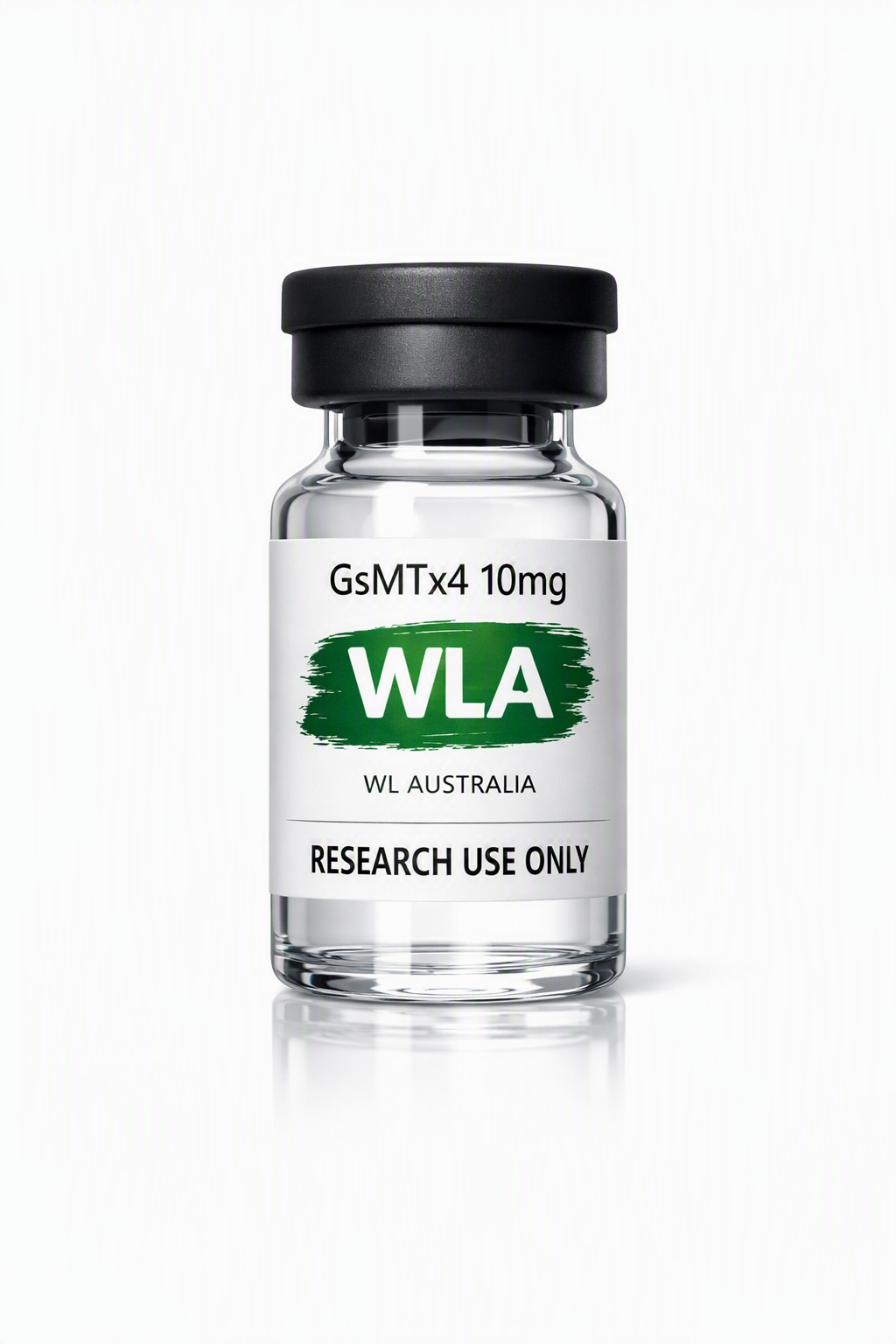
GsMTx4 10mg
Introducing GsMTx4 (Grammostola mechanotoxin #4), a revolutionary peptide derived from the venom of the Chilean rose tarantula, that is setting
...$220.00
AUD
In stock
Documented batches
Batch-linked specification data available on request.
Cold-chain dispatch
Packed to protect stability across Australian transit.
Clear specifications
Purity, format and storage listed for every compound.
Support
Our team answering technical questions.
Introducing GsMTx4 (Grammostola mechanotoxin #4), a revolutionary peptide derived from the venom of the Chilean rose tarantula, that is setting new standards in pharmacological research. This unique compound specifically targets cationic mechanosensitive ion channels, such as Piezo1 and TRP family channels, providing precision and effectiveness unmatched by traditional blockers. By functioning as a “gating modifier,” GsMTx4 alters membrane tension rather than obstructing the channel pore directly, offering a novel approach to modulating ion flow.
With its highly selective action, GsMTx4 opens up exciting possibilities for the study of various physiological processes, including pain perception and cellular signaling pathways. Researchers can harness its capabilities to develop new treatments for a range of diseases that are tied to mechanosensitivity, from chronic pain conditions to hypertension. Its ability to fine-tune ion channel activity presents a groundbreaking avenue for therapeutic interventions, potentially enhancing the efficacy and safety profiles of future medications.
Experience the future of pharmacology with GsMTx4, where innovative science meets unparalleled therapeutic potential. Unlock new dimensions in your research and clinical applications with a compound that not only alters the way we understand mechanosensitivity but also paves the way for groundbreaking advancements in medicine. Don’t miss the opportunity to leverage this cutting-edge tool in your work — transform possibilities into realities with GsMTx4.
GsMTx4 (Grammostola mechanotoxin #4), a bioactive peptide derived from the venomous secretions of the Chilean rose tarantula (Grammostola spatulata), exemplifies a prototypical instance of the rich biochemical arsenal utilized by arachnids for predation and defense. This peptide has garnered significant attention within the realm of neurophysiology and pharmacology due to its remarkable specificity as a selective inhibitor of cationic mechanosensitive ion channels (MSCs), particularly the Piezo1 channel and select members of the transient receptor potential (TRP) channel family, such as TRPC1 and TRPC6. The mechanism by which GsMTx4 exerts its inhibitory effects transcends traditional blockade; rather than occluding the ionic pathway within these channels, it functions as a gating modifier that modulates the biophysical attributes of the membrane environment, effectively altering the channel’s responsiveness to mechanosensory stimuli.
Through its unique mode of action, GsMTx4 demonstrates the potential to elucidate the intricate dynamics of mechanotransduction pathways — critical processes by which cells perceive and respond to mechanical forces. The allosteric interaction of GsMTx4 with these MSCs not only enables a nuanced understanding of their physiological roles but also presents an invaluable pharmacological tool for exploring the complex interplay between mechanosensation and cellular signaling. As such, the peptide occupies a promising niche within therapeutic development, poised to inform novel strategies for the treatment of pathologies associated with dysregulated mechanosensitivity, including various cardiovascular, neurodegenerative, and inflammatory disorders. The implications of GsMTx4 extend beyond mere academic curiosity, marking it as a salient candidate for drug design initiatives aimed at harnessing its mechanistic properties for innovative clinical applications.
- Reducing calcium overload and mitigating contraction-induced myofiber damage.
- Fostering myogenic differentiation (helping the body build and repair muscle fibers).
- Ischemia-Reperfusion Injury (IRI): The mirror enantiomer form (GsMTx4-D) has been shown to significantly reduce cardiac infarct size (area of dead tissue) and improve overall cardiac output following a heart attack. [1]
- Mechanical Allodynia & Hyperalgesia: It relieves hypersensitivity to physical touch or light pressure, including severe pain associated with Schwannomatosis (SWN). [1]
- Non-Opioid Pathway: Synthetic variants derived from GsMTx4 have demonstrated pain-relieving effects as strong as morphine in animal models, but without causing opioid tolerance, motor impairment, or addiction risks . [1]
- Suppressing neurogenic inflammation and reducing microglial reactivity.
- Promoting nerve axon growth and myelination to restore motor functions.
- Osteoarthritis (OA): Mechanical strain in arthritic joints over-activates Piezo1, forcing cartilage cell death. GsMTx4 prevents this apoptosis, helping to maintain cartilage matrix production and halt the progression of joint degeneration. [1]
- Stereo-Insensitive (The D-Form Advantage): Both the natural L-form and the synthetic mirror-image D-form (GsMTx4-D) perform identical blocking actions. The D-form is highly advantageous for therapeutics because it resists degradation by the body’s natural protease enzymes, giving it a much longer half-life
Continue researching
Related Products



 Immune Support, ant bacterial, anti viral, auto immune.
 Bioregulators
 Brain
 Skin & Hair Products



Reviews
Clear filtersThere are no reviews yet.